
Choosing a British curriculum school in Ajman is one of the more significant decisions a family makes, and it’s rarely as simple as picking whichever school shows up first in a search. Most comparison pages online list a dozen schools with a single fee number and little else — not really enough to decide with confidence. This guide walks through what actually affects cost and quality across British curriculum schools in Ajman, what questions are worth asking before you commit, and where Bright Future Private School fits into that picture.
Why Ajman, specifically, for a British curriculum education
Ajman has become a genuinely popular choice for families who want a British curriculum education without Dubai-level costs. It sits close enough to Dubai and Sharjah that many expat families already live in the area, or are actively considering a move here — often specifically because school and living costs are noticeably lower than in Dubai, without giving up access to a recognised British-style education.
British curriculum schools generally follow the UK National Curriculum, sometimes adapted or blended with an IB or Cambridge pathway at the premium end. In the UAE specifically, most British curriculum schools also incorporate UAE Ministry of Education requirements — Arabic language, Islamic Studies (or Moral Education for non-Muslim students), and UAE Social Studies — alongside the core British subjects. This blended approach is a regulatory requirement across the country, not something unique to any one school, so it’s worth expecting regardless of which British curriculum school you choose.
What fees actually look like across British curriculum schools in Ajman
Fee ranges vary more than most parents expect, largely based on three things: whether a school offers an added IB or Cambridge track alongside British curriculum, how established the school’s facilities and campus are, and which year group your child is entering (fees typically rise each year through primary and secondary).
Broadly, across British curriculum schools in Ajman:
- Premium tier (British curriculum blended with IB or Cambridge pathways): often AED 24,000 to AED 65,000+ annually, depending on year group
- Mid-market, British-curriculum-only schools: typically AED 15,000 to AED 30,000 annually
- More budget-focused options: sometimes as low as AED 10,000 to AED 20,000 annually
At Bright Future Private School, 2026-27 fees range from AED 18,700 to AED 29,800 depending on grade, covering FS2 through Year 10. That places us in the mid-market range — a genuine British-curriculum focus without an added IB track, and without cutting corners on class sizes or teacher quality to hit a rock-bottom price point.
It’s worth noting that headline tuition rarely tells the full story. Almost every school, including ours, bills registration, learning resources, uniform, and transport separately from tuition. When comparing schools, always ask for the all-in annual cost for your specific child’s year group, not just the advertised tuition figure — the gap between the two can be larger than parents expect.
Is it actually cheaper than Dubai or Abu Dhabi?
This is one of the most common questions parents ask when they start looking at Ajman specifically, and the honest answer is: generally, yes, meaningfully so. Comparable British curriculum schools in Dubai often start well above AED 30,000–40,000 for early years alone, before even reaching primary or secondary fee levels. In Ajman, equivalent early-years places typically start in the AED 15,000–25,000 range. Over a full school journey from FS2 through secondary, that difference compounds into a substantial saving — often enough to be a deciding factor for families weighing where to live, not just where to send their children to school.
That said, cost savings only make sense if the commute makes sense too. If you currently live in Dubai and are only considering Ajman for the fee difference, it’s worth being realistic about the daily drive — for most families, a long commute isn’t worth the savings unless you’re already living in Ajman, Sharjah, or Umm Al Quwain, where the cost benefit doesn’t come attached to a difficult school run.
What actually matters beyond the fee number
Price is the easiest thing to compare, which is exactly why most comparison content stops there. But a handful of other factors matter just as much, if not more, for your child’s actual day-to-day experience:
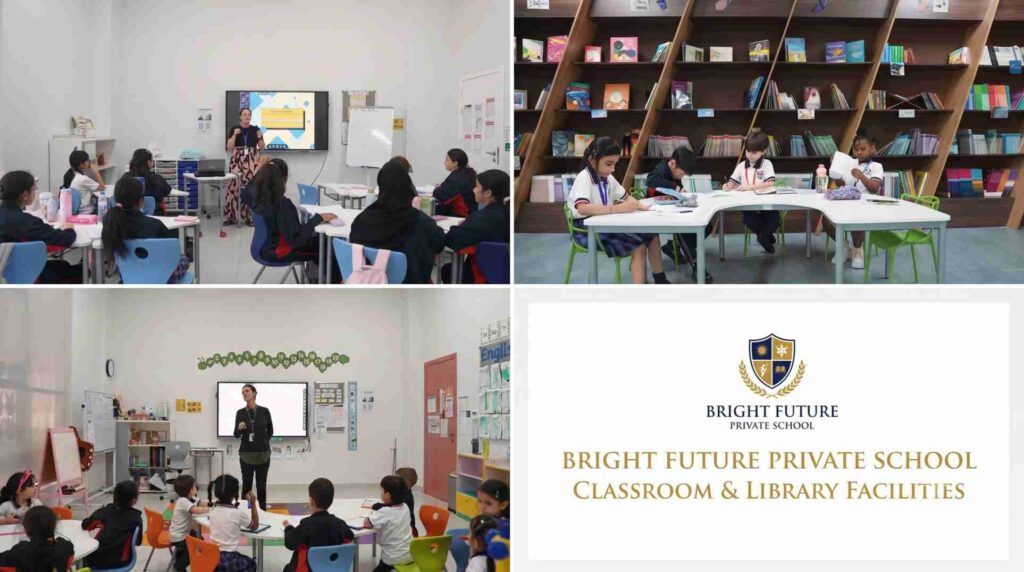
Class sizes. Smaller classes generally mean more individual attention from teachers, which matters most in the early years when foundational literacy and numeracy habits are formed. Ask any school directly for their average class size by year group, not just a marketing claim of “small classes.”
Teacher background. Native English-speaking teachers affect language immersion more than many parents initially expect, particularly for non-native English speaking families who want strong, natural English exposure in the classroom, not just in textbooks.
Accreditation status. This is genuinely important context for the Northern Emirates specifically: unlike Dubai (where KHDA publishes detailed annual inspection ratings for every private school), Ajman and the other Northern Emirates don’t currently require or publish equivalent public inspection reports. This doesn’t mean quality is lower — it means the burden shifts to you as a parent to ask directly. Ask any school what international accreditation body they hold membership with, or are actively working toward, and what that process actually involves.
Community and nationality mix. Some British curriculum schools in Ajman lean heavily toward one or two nationality groups; others are more genuinely international. If a diverse, multicultural classroom matters to your family’s values, ask directly about the nationality breakdown of the student body rather than assuming.
What happens beyond the classroom. Extra-curricular activities, school trips, house systems, and pastoral/wellbeing support vary significantly between schools and often say more about a school’s actual day-to-day culture than its prospectus does.

A simple shortlist checklist before you decide
If you’re actively comparing two or three schools, it’s worth walking into each visit with the same list of questions, so you’re comparing like for like:- What is the full, all-in annual cost for my child’s specific year group (tuition + registration + resources + uniform + transport if needed)?
- What is the average class size in the year group my child would join?
- What percentage of teaching staff are native English speakers?
- What accreditation does the school hold, or is it actively pursuing, and what stage is that process at?
- What does a typical week look like beyond core academics — clubs, sports, trips, pastoral support?
- What is the school’s policy on sibling discounts, and how are annual fee increases communicated?
Frequently Asked Questions
Are British curriculum schools in Ajman cheaper than Dubai or Abu Dhabi?
Generally, yes. Comparable British curriculum schools in Dubai often start well above AED 30,000–40,000 for early years alone, while Ajman schools typically start in the AED 15,000–25,000 range for the same stage.
Does a lower school fee mean lower quality?
Not necessarily. Since Northern Emirates schools don’t publish formal inspection ratings, a more useful signal is asking directly about teacher retention, class sizes, and accreditation progress — which is exactly why we’re transparent about ours.
Is it worth commuting from Dubai or Sharjah to a school in Ajman?
For most families, a long daily commute isn’t worth the savings. Ajman schools work best for families already living in Ajman, Sharjah, or Umm Al Quwain.
Do the fees shown here include everything, and are they final?
These figures reflect 2026-27 tuition only. Registration, learning resources, uniform, and transport are billed separately, and sibling discounts may apply. Exact figures and full terms and conditions are confirmed on our official Tuition Fees page — always confirm final costs there before making a decision.
If you’d like to see Bright Future for yourself
The best way to judge any school is to visit it in person, not just compare numbers online. See our full 2026-27 fee breakdown →, read exactly how our admission process works →, or book a private campus tour → to meet our teachers and see the classrooms for yourself.